Best PEMF Devices in 2025: Benefits, Reviews, and Buying Guide
Best PEMF Devices in 2025: Benefits, Reviews, and Buying Guide
If you are hunting for a natural, drug free way to speed recovery, reduce pain, or support overall wellness, pulsed electromagnetic field therapy might be on your radar. I first got curious about PEMF years ago when a training partner swore a small portable PEMF device helped his acute hamstring flare up. It sounded a little out there. Then I tried one myself. The results were subtle at first, but over weeks they added up. Since then I have used, tested, and talked with clinicians about many models. In this guide I break down how PEMF works, the PEMF benefits people report, common pitfalls, and how to choose the best PEMF devices in 2025 for your needs.
Quick overview: What is PEMF?
PEMF stands for pulsed electromagnetic field therapy. In plain language, a PEMF machine sends brief pulses of magnetic energy into the body. Those pulses are not the same thing as static magnets and they do not generate heat. Instead they influence cells and tissues by changing electrical patterns at the membrane level. Scientists often describe effects like improved cell signaling, better microcirculation, and modulation of inflammation. Those are big phrases. Here is the straightforward take: PEMF can help cells work more efficiently, which often shows up as less pain, faster recovery, and better sleep for some people.
People call PEMF devices many things. You might see terms like magnetic therapy devices, PEMF therapy at home, portable PEMF devices, or PEMF machine. They all point back to the same core idea: timed magnetic pulses that aim to support body systems without drugs.
How PEMF works, explained simply
We could go deep into biophysics. I will keep it practical. Cells maintain an electrical charge across their membranes. That charge helps regulate everything from nutrient exchange to muscle contraction. Pulsed electromagnetic fields gently nudge those charges. Think of it like tuning a radio so the station comes in clearer.
- Membrane potential: PEMF can help restore the electrical balance of cells, which supports cellular repair.
- Microcirculation: Pulses can improve blood flow in tiny vessels. Better flow helps tissue heal.
- Inflammation: PEMF may modulate inflammatory signals. That does not mean it cures disease, but it can reduce symptoms for many people.
- Nitric oxide: Some studies suggest PEMF increases nitric oxide, a molecule that relaxes blood vessels and supports healing.
In my experience, the best results come when PEMF is used consistently and combined with good sleep, nutrition, and appropriate exercise or therapy. It is an aid, not a magic bullet.
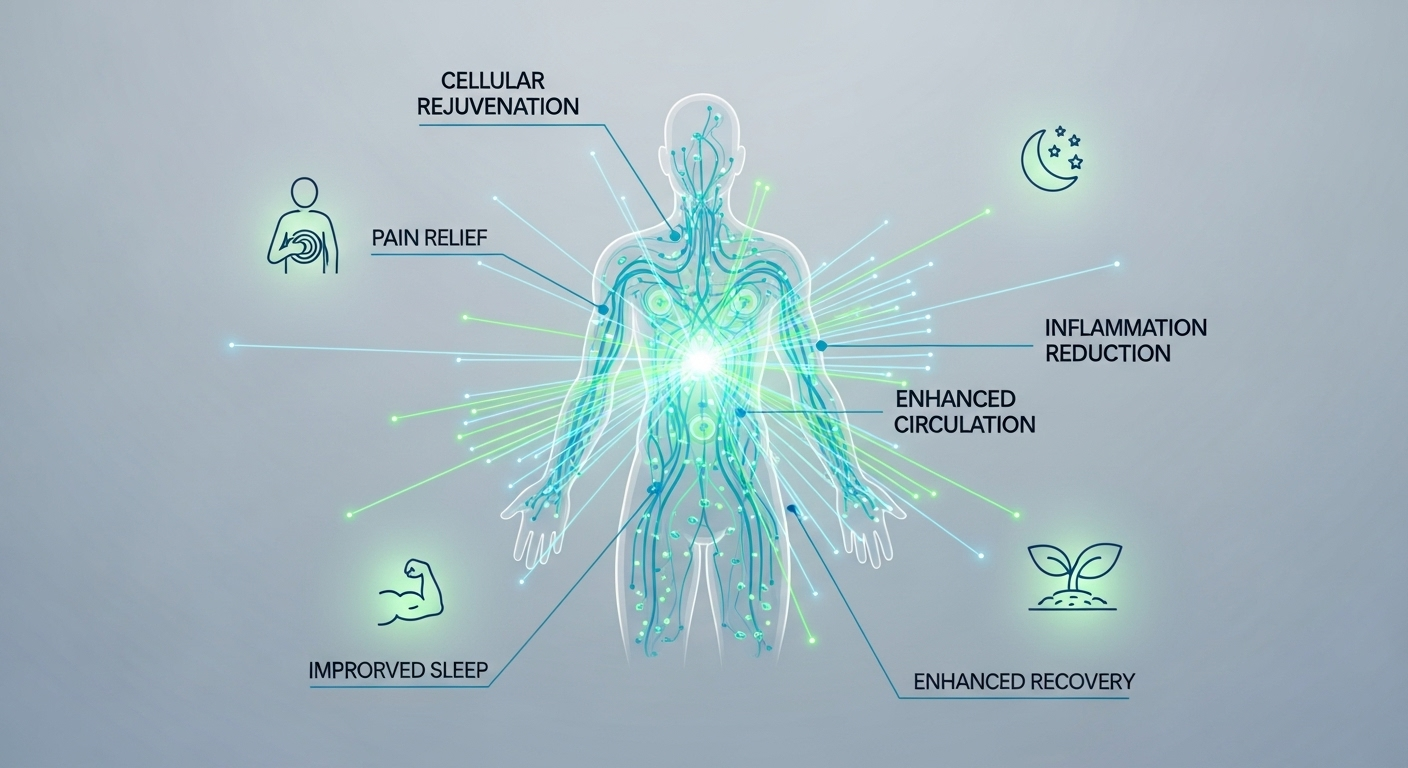
PEMF benefits people actually notice
From talking with athletes, chronic pain patients, and clinicians, a few benefits come up repeatedly. Here are the ones I see most often.
- Pain relief: Many people report reduced joint and muscular pain after several sessions. PEMF for pain relief seems particularly useful for chronic low back pain and osteoarthritis, though responses vary.
- Faster recovery: Athletes use portable PEMF devices to speed recovery after hard workouts. Short sessions postworkout can reduce soreness and help with next-session readiness.
- Improved sleep: Better sleep is a surprisingly common result. If you sleep better, recovery follows.
- Reduced inflammation: People with tendonitis, bursitis, and some inflammatory conditions notice symptom drops when using PEMF regularly.
- Bone healing support: Specific PEMF machines have a history in orthopedics for helping fracture healing and post-surgical recovery.
Not everyone benefits equally. I’ve seen big wins and mild or no effects. Expect variable responses and be ready to track your results over weeks, not days.
Types of PEMF devices in 2025
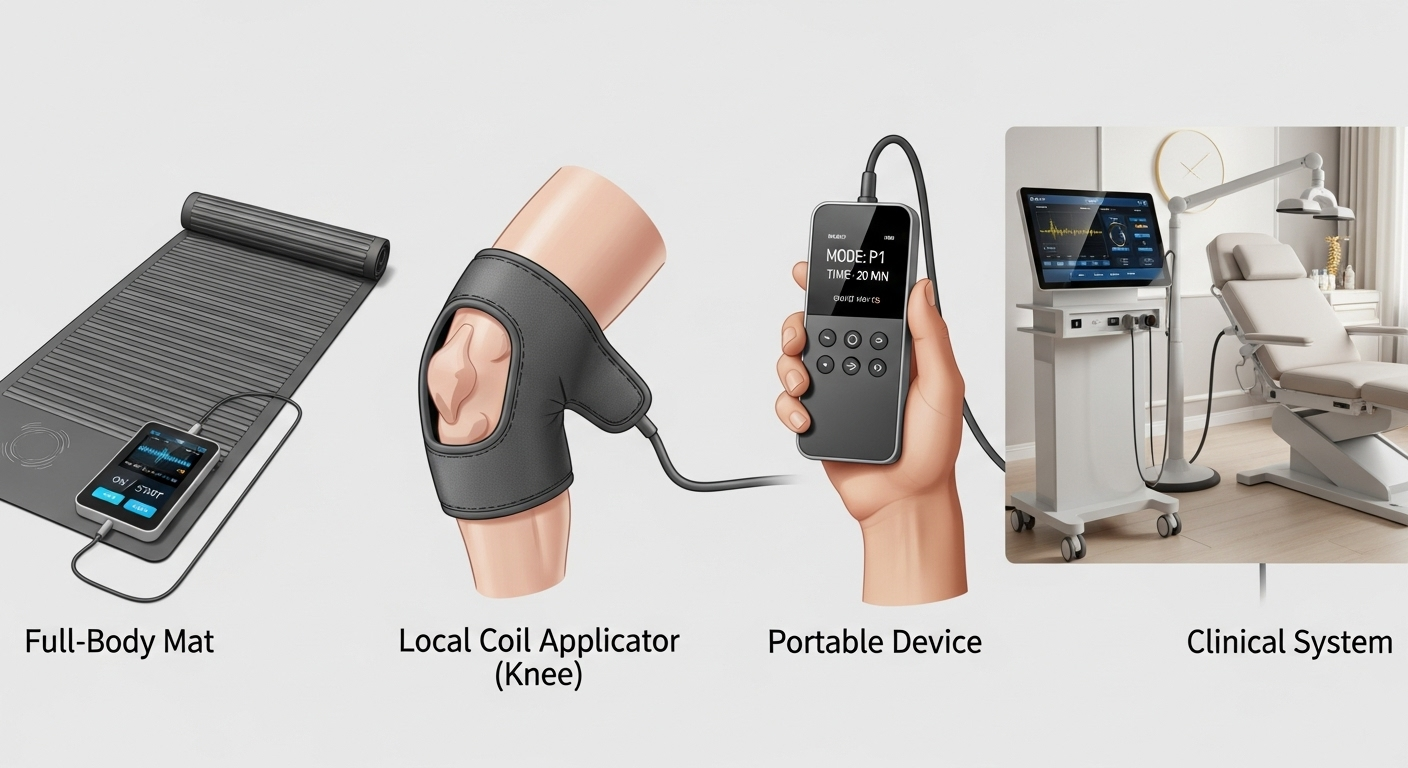
PEMF devices come in a few main flavors. Your needs will determine which is best.
- Full body mats: These look like a mattress pad and deliver fields across the whole body. Good if you want general wellness, sleep support, and systemic effects.
- Local applicators: Small pads or coils you place over a shoulder, knee, or low back. Best for targeted pain and injury recovery.
- Portable PEMF devices: Handheld or battery powered units for on the go recovery. Great for athletes and travel.
- Clinical systems: Higher power machines used by clinics and physiotherapists. They often provide a wider range of frequencies and intensities.
Each type comes with tradeoffs. Full body mats are convenient but usually have lower intensity. Local applicators dig in more precisely. Portables win on convenience. In my experience, most people do well with either a mat for daily wellness plus a small local applicator for acute issues.
Key specs that matter (and what they actually mean)
When you compare PEMF devices, the marketing can be confusing. Here are the practical specs to focus on and how I interpret them.
- Frequency (Hz): This is how many pulses per second. Lower frequencies like 1 to 30 Hz are often used for pain and recovery. Higher frequencies have other uses. Don’t assume higher is better.
- Intensity (mT or gauss): Measured in millitesla or gauss. Clinical devices sometimes go higher. More intensity can mean deeper penetration. But more is not always safer. Look for devices that allow adjustment.
- Waveform: Sine, square, sawtooth, or complex pulses change how cells respond. Devices that let you try different waveforms give you flexibility.
- Pulse pattern and duty cycle: This is how the machine paces pulses. Programs that vary timing can be more effective than a single repeating pulse.
- Coverage area: How much of your body is affected during a session. Mats cover more. Small coils are focused.
Here is a simple analogy. Frequency is the rhythm, intensity is the volume, and waveform is the tone. You want the right combination for your goal. In my practice, I start with low frequency, moderate intensity, short sessions, and then adjust based on response.
Common mistakes people make with PEMF
People often ask what they are doing wrong when a device does not help. These are the usual suspects.
- Expecting instant miracles: PEMF often works slowly. Look for changes over weeks, not hours.
- Overusing the device: More is not always better. Excessive sessions can blunt benefits. I typically recommend starting with 2 to 3 sessions a week or short daily sessions and then adjusting.
- Buying the cheapest option: Low cost often means poor build, inconsistent pulses, and no support. That yields unreliable results.
- Ignoring medical context: PEMF is complementary. If you have serious conditions, talk with your clinician before starting home therapy.
- Wrong device for the job: Using a low intensity mat for a specific tendon injury is a mismatch. Match device type to the problem.
Those mistakes are easy to avoid if you ask a few questions before buying. More on that below.
Safety and contraindications
One of the reasons PEMF has grown in popularity is its safety profile. Most people tolerate it well. Still, there are important cautions.
- Do not use PEMF if you have an active implanted electronic device such as a pacemaker or certain neurostimulators, unless your cardiologist or device manufacturer approves it.
- Avoid PEMF during pregnancy unless a physician says it is OK. There is not enough evidence to guarantee safety in pregnancy.
- If you have active cancer, consult your oncologist. PEMF may be used in some contexts but only under guidance.
- Skin sensitivity: In rare cases, people experience irritation where applicators contact the skin. Use a thin cloth barrier if needed.
When in doubt, ask a clinician. It is a quick step that prevents problems.
How to pick the right PEMF device
I always tell people to treat a PEMF purchase like a small appliance investment. You would not buy a blender without checking power, warranty, and reviews. Same approach applies here.
Follow this short checklist before you click buy. It covers the main decision points I use when advising friends and clients.
- Define your goal: Is this for full body wellness, targeted pain relief, or athletic recovery? Your goal narrows the options fast.
- Check frequency and intensity ranges: Make sure the device covers low frequencies (1 to 30 Hz) and offers adjustable intensity.
- Look for program flexibility: Custom programs or at least several preset protocols help you tailor treatment.
- Assess portability: If you travel, a battery powered portable PEMF device may be worth it.
- Read real user reviews and clinical references: Look for third party reviews from clinicians and verified buyers.
- Warranty and support: Good companies stand behind devices with a solid warranty and helpful tech support.
- Return policy: Try to buy from a seller who offers a trial period or easy return. You want to test how your body responds.
In my experience, spending a bit more on a well-built device pays off. You get consistent pulses and better support when questions pop up.
The best PEMF devices in 2025: Categories and top picks
Rather than crowning a single winner, I grouped top picks by what people need: best full body mat, best local applicator, best portable PEMF devices, and best clinical system. This helps you match device type to your use case.
Best full body mats for daily wellness
If you want systemic benefits like sleep improvement and general recovery, full body mats make sense. They are simple to use: lie down and run a program. Look for adjustable intensity and a range of frequencies.
- Mat-type system A — Great for lifestyle use. Offers multiple preset programs, adjustable intensity up to moderate mT levels, and a comfortable mat design. I like this option for people new to PEMF who want daily sessions.
- Mat-type system B — Higher end mat with more frequency customization and a longer warranty. It also integrates with clinical channels for use by therapists.
Tip: If you are mainly looking to improve sleep, try a gentle evening program for 30 to 45 minutes instead of a high intensity daytime setting.
Best local applicators for targeted pain
Local coils and small pads deliver focused fields to injured areas. They are the tool of choice for tendonitis, stubborn joint pain, and muscle strains.
- Local pad X — Compact, easy to place, with adjustable frequency down to 1 Hz. Great for shoulders, knees, and elbows. Users report fast symptom changes when they pair it with physical therapy exercises.
- Coil model Y — Deeper penetration and variable waveforms. Comes with a small remote for quick program switching. This is the type I recommend when a clinician prescribes targeted therapy.
Practical note: For persistent tendon injuries, use the local applicator after warming the tissue with light activity and keep sessions consistent for at least 4 to 8 weeks.
Best portable PEMF devices for athletes and travel
Portable PEMF devices are compact, battery powered, and often work for on the sidelines or in hotel rooms. They trade some power for convenience.
- Portable unit P — Lightweight, easy to strap on, and good for short postworkout sessions. I carry a similar device in my gym bag for quick recovery between sessions.
- Wearable band Q — Designed for specific joints like the knee or ankle. The battery life is solid and it pairs with a phone app for program control.
Remember: portability comes at the price of peak intensity. If you need deep penetration for bone healing, a portable device is not the substitute for a clinical system.
Best clinical systems for clinics and physiotherapists
Clinics use more powerful systems that let therapists customize frequency, intensity, and waveform precisely. These units often cost more but deliver consistent, repeatable treatments.
- Clinic system Z — Known for reliability and service. It supports a wide range of protocols and has accessories for hands on therapy.
- Clinic system W — Excellent for orthopedic practices. It offers higher intensities and proven protocols for bone healing.
Clinicians value systems with strong customer support and training. If you are a physiotherapist, budget for staff training when you add PEMF to your services.
Simple PEMF protocols you can try at home
Below are practical starting points based on common goals. These are general suggestions. Personalize them slowly and pause if anything feels off.
- General wellness and sleep: Low frequency 1 to 10 Hz, low to moderate intensity, 30 to 45 minutes in the evening.
- Pain flare or acute injury: 5 to 20 minutes, moderate frequency, targeted applicator, once or twice daily for the first week, then reassess.
- Athletic recovery: 10 to 20 minutes after training at moderate intensity. I often recommend short sessions immediately after activity and another session before sleep.
- Chronic tendon or joint issues: Targeted sessions 3 to 5 times per week for 4 to 8 weeks. Pair with graded exercise and load management.
Note: If you have a mat that supports full body sessions, start with shorter durations until you see how your body responds. Track your pain, sleep, and recovery in a simple notebook. Data helps guide adjustments.
Common misconceptions and realistic expectations
PEMF is sometimes oversold as a cure all. That creates unrealistic expectations and disappointment. Let’s set the record straight.
- Not a miracle cure: PEMF supports physiological processes. It helps many people, but it does not fix everything overnight.
- Individual variation is real: Two people with similar conditions can respond very differently. Genetics, lifestyle, and other therapies matter.
- It works best as part of a plan: When combined with physical therapy, nutrition, sleep optimization, and sensible exercise, PEMF often shows better results.
In my experience, people who treat PEMF like one tool in a toolbox get the best outcomes. Those who expect it to replace medical care or rehab tend to be disappointed.
Budgeting: how much should you expect to spend?
PEMF price points vary widely. Here is a rough breakdown to set expectations.
- Entry level portables: $200 to $800. Good for travel and light recovery but limited intensity.
- Mid range home systems and local applicators: $800 to $3,000. Most people find a solid balance of performance and price in this range.
- Full body mats and advanced home systems: $2,000 to $6,000. These offer more features, better construction, and deeper therapy options.
- Clinical systems: $6,000 to $20,000 or more. Used in clinics with professional support and higher power.
Buy the best device you can afford and that matches your goals. A cheap device that does not deliver consistent pulses is a false economy.
What to watch for in marketing claims
Manufacturers sometimes make bold claims. As a rule, be skeptical of absolute promises like complete cure claims or guaranteed performance for every condition. Instead, look for:
- Clinical references or peer reviewed studies that are relevant to the device.
- Clear specification of frequency and intensity ranges.
- Transparent warranty and service policies.
- Independent user reviews and third party testing.
If a seller promises dramatic results with minimal evidence, ask for more information or a trial period. Most reputable companies are transparent and will walk you through real expectations.
Case examples: realistic outcomes
To make this concrete, here are a few short examples based on practitioner experience and client reports.
Runner with chronic Achilles pain: After six weeks using a local applicator three times a week, paired with eccentric loading exercises, pain reduced enough to resume training with no step back.
Office worker with insomnia and neck stiffness: A daily 30 minute mat session in the evening improved sleep latency and reduced morning stiffness in 3 weeks.
Weekend athlete with persistent knee soreness: Portables used after games reduced next day soreness and speeded warm up for the next match.
These are not guarantees. They are examples of how PEMF can perform when used sensibly alongside other therapies.
Questions to ask vendors and clinics
When you are comparing devices or clinics, ask these practical questions. They separate knowledgeable providers from the rest.
- What frequencies and intensities does the device support?
- Do you have clinical studies or references specific to the device or protocol?
- What is the return policy and warranty?
- How is the device serviced and how long is typical support response time?
- Can the device be used in clinical settings or only for home use?
- Are there training resources or consultation if I want to use the device for specific conditions?
Good vendors will answer these clearly. If they dodge the questions, consider that a red flag.
Integration with professional care
If you are a physiotherapist, wellness coach, or clinician, PEMF can be a credible addition to your toolkit. In practice, the best outcomes happen when PEMF is integrated into a plan that includes hands on therapy, targeted exercise, and lifestyle coaching.
Start simple. Incorporate a few protocols into your practice, track outcomes, and refine. Offer clients home device rental or guided home programs. That increases adherence and helps demonstrate value.
Common technical pitfalls and how to avoid them
Even with a good device, users run into technical issues. Here are a few and how to solve them.
- Poor contact with the skin: Ensure the mat or pad sits flat. Use a thin towel if you are concerned about hygiene but avoid thick barriers that reduce field strength.
- Battery and power confusion: For portables, check charger specs. Long trips require spare batteries or a power bank rated for the device.
- Software updates and apps: Keep firmware up to date. App controlled devices can improve usability but sometimes introduce bugs. Test updates before fully relying on them for protocols.
- Interference with other devices: Keep PEMF equipment away from sensitive electronics and implanted devices unless cleared by a professional.
Small attention to setup saves frustration and preserves results.
How to test a PEMF device before you commit
A short trial can save money. Here is a simple 4 week test you can do to see if a device helps.
- Baseline for one week: Track pain, sleep, and recovery without PEMF.
- Start low: Use a low frequency, moderate intensity, short session for the first week of the trial.
- Increase gradually: If you tolerate it, slightly lengthen or intensify sessions in weeks two and three.
- Assess results in week four: Compare your notes to baseline. Look for consistent improvements in at least two measures.
If you see positive trends and no adverse reactions, the device is likely a keeper. If not, return it and try a different approach.
Final thoughts and practical advice
PEMF therapy is not a fad. It has a growing evidence base and a lot of practical anecdotal support, especially for pain relief, recovery, and sleep. That said, results vary. In my experience the people who get the most out of PEMF are those who use it consistently, combine it with other healthy habits, and choose the device that matches their need.
My simple advice: start with clear goals, pick the right category of device, test it for a month, and track results. If you are a clinician or wellness practitioner, start small in your practice and build protocols that integrate with the care you already provide.
Helpful Links & Next Steps
If you want to explore devices and see what might fit your situation, start with a short trial and get guidance from a trusted clinician when needed. And if you would like to dive deeper, this blog and its resources can help you compare features and protocols.
Explore the Right PEMF Device for Your Health Today
Thanks for reading. If you have specific goals or conditions, tell me about them and I can suggest which type of PEMF device would make the most sense for your case. Small questions often lead to better buys and better outcomes.